Our peru itinerary on google maps. The golden stars are all day trips/side trips/treks. It shows our border crossings. From Arequipa, Peru we flew to Santiago, Chile.
Friday, April 26, 2013
Our Peru Itinerary
Our peru itinerary on google maps. The golden stars are all day trips/side trips/treks. It shows our border crossings. From Arequipa, Peru we flew to Santiago, Chile.
Protecting Against Loss During Long Term Travel (and What Travel Insurance to buy)
I wrote about getting robbed in Calama, Chile here and here. A recent comment from a reader reminded me to write this post about how to protect yourself from theft.
In a nutshell, its nearly impossible to make your travel 100% theft-proof. But you can plan so that its nothing more than an unfortunate inconvenience.
I may be the most careful, paranoid person in the world, but someone out there is smarter and is making a living out of stealing. That guy is hard to beat, unfortunately. Swami and I went through a period of retrospection during those countless bus rides immediately after the theft, where we'd keep telling each other "Never again will I do this...." or "Next time, lets not forget to scan that document...". I wanted to compile some of those lessons learned here, for when you need them, you really really need them.
Here are some tips to ensure that if a theft does occur, you get back on track quickly.
In a nutshell, its nearly impossible to make your travel 100% theft-proof. But you can plan so that its nothing more than an unfortunate inconvenience.
I may be the most careful, paranoid person in the world, but someone out there is smarter and is making a living out of stealing. That guy is hard to beat, unfortunately. Swami and I went through a period of retrospection during those countless bus rides immediately after the theft, where we'd keep telling each other "Never again will I do this...." or "Next time, lets not forget to scan that document...". I wanted to compile some of those lessons learned here, for when you need them, you really really need them.
Here are some tips to ensure that if a theft does occur, you get back on track quickly.
Buy Travel Insurance
Like I said before, we are incredibly glad we got trip insurance. There are plenty of companies and plans out there to choose from, but we purchased ours from worldnomads. They ended up being great to deal with and covered our losses up to the limits specified in the policy, just as they promised. The insurance we bought covered the following:
- Things we lost - laptop, DSLR camera, lenses, tablet, other electronic accessories
- Trip interruption - food and hotel costs for the days it to took to recover our travel documents, eg. passport, green card etc.
- Airfare - one of us had to reschedule our flights, so the insurance covered some part of the cancelled fare/new fare.
- Documents - passport application fees and Transportation letter fees
Keep policy number and phone number very handy!
Keep online copies of all important documents
When you lose a passport or green card, embassies will require a lot of documentation to replace them. Its best to have them handy on portable hard drives and/or online storage. Here are things to have VERY handy:
- Passport - copy of ALL pages. Not just front or back page. We had only the front and back page and could not prove to the US embassy on what date we left the country last. We also had to prove to the Chilean police when we entered the country. We also lost all our visa stamps!
- Other ID's - drivers license, voter ID, student ID etc. Secondary IDs are sometimes asked.
- Financial documents - bank and credit card statements. Easy to get online, but you may not have a fast internet connection to accomplish all your online needs. I was planning to use my credit card statement to show I was at LA airport on a given date to prove my residence in the US, as supporting documentation.
- Visas of resident country - In our case scanned copy of US green card. We had green cards, but we also had all our green card application documents on online storage. Very useful.
- Entry/Exit stamps - When traveling abroad, whenever your passport is stamped, please take a picture with your smartphone/tablet/camera and email to yourself. You will thank yourself later. We wish we did this with our Colombia entry stamps as the US embassy asked for this.
- Other travel and identification documents - vaccinations, yellow fever certificate (required for Bolivia), copies of tickets, important receipts etc. Marriage certificate if you are married.
- BOARDING PASS - most important! Boarding pass stubs are very important documents to store until you are done with your trip. Just a clear picture with a smartphone will do. The US embassy wanted either this or our entry/exit stamps. We had neither and had to frantically figure out other ways to prove our exit dates.
Portable hard drives in different bags
Swami did a very clever thing by getting us each a portable hard drive and backing them up regularly. By doing this, we only lost about a week's worth of pictures on our DSLR, as our laptop was lost too. Thankfully our compact camera preserved our memories from Torres Del Paine. I highly recommend carrying portable hard drives and/or pen drives placed in different bags with some backup data.
Keep a handy list of information in your travel notebook
Dont have a travel notebook? Its better to start one and keep things like
- frequent flyer numbers,
- membership numbers and
- coded passport numbers etc.
- Numbers to your credit card and debit card institution. Our stolen backpack had a bunch of cards that had to be cancelled and we didnt have access to these numbers.
- Insurance policy number and their phone number
Cheaper and fewer gadgets
We love technology and went overboard on the expensive toys we carried. A macbook pro, a very good Nikon DSLR and a wide angle lens, a tablet, a compact camera...the list goes on. Next time I travel, I will exclusively be using a netbook or a used old laptop just for this purpose. The MBP was meant for storing large amounts of data and video/photo editing which doesnt happen as often as one would like. Infact, I am still updating the blog a year after we completed, so the MBP was not mandatory at all! I am no travel blogger or full time writer. My blog and picture editing can wait until I return from the trip.
Protecting in layers
Some things are very painful to lose. Passports and documents like green cards. Our passport was really easy to get, but the green card process is much much more complex. And its just a card which we could have protected easily. We have a hidden wallet, but we did not use it at that time. Having fewer critical things to protect is easier than watching a heavy backpack with gadgets. I didnt lose my hand bag and I could have kept the passports in it! You dont need one of those weird wallets, but just make sure that what needs maximum protection is lightweight and close to the body.
Carry less
A lot of what we lost was unnecessary for the purpose of travel. We simply got carried away. If we had lighter, fewer packs (one big pack, one small pack, etc), caring is much easier. You lose less, cant really refute that!
If you have had a similar experience, I'd be really eager to hear about your lessons learned.
Protect your data
- Password protect all devices.
- Encode all important documentation in a folder preferably.
- Change all email passwords and bank passwords immediately
- Sign up for a service that tracks devices/automatically purges information (or just bring a chromebook!)
Packing list for the w trek in Patagonia
As a vegan trekking in Torres Del Paine, I wanted to share our food and gear list. All items are easily available in the chain supermarket called Unimarc. Since the W trek is a completely independent trek, you are responsible for carrying everything in and cooking for yourself.


Food list for W-trek, patagonia:
- Candy
- Trail Mix
- Dried Fruit
- Spicy peanuts
- Oat cereal bars
- Cereal mix oat cookies
- Costa muesli cookies
- Energy bars from Peru - found vegan energy bars in Lima!
- Soya cookies
- Dark chocolate
- Maggi stock cubes - checked ingredient list multiple times
- Soup packets
- Dried noodles
- Rice primavera instant food
- Tea bags
- Hot chocolate - 1 bar
- Hot breakfast drink pack from Cuzco containing local grains - excellent buy!
- Raisins
- Oats
- Jam (sold in blocks)
- Instant juice packets. Mix water to make juice.
Clothes list for one person, male or female
- Quick dry pant, 1
- T-shirt for hiking, 1
- Fleece pant for sleeping, 1
- Synthetic base layer shirt, 1
- Synthetic base layer pant, 1 - available at REI
- Rain pant
- Rain jacket
- Fleece shirt
- One extra t-shirt - optional
- Innerwear - as required
Gear:
- Tent
- Sleeping bag
- Sleeping pad
- Stove
- One pot for cooking. Utensils. Plastic cups for drinking hot/cold.
- Gas canisters
- Matches
Other very helpful items to have:
- Large plastic bag to cover the tent fly as it gets wet in the rain
- Hooks/carabiners outside the pack to strap things
- Camp slippers
- Fingerless gloves
- Minimum toiletries
- Spare camera battery
- Candy is great to carry handy
- Small empty water bottle. The water in TDP is amazingly tasty and refreshes immediately, so no need to carry water.
- No need for plates - can eat from pot directly.
- Many plastic bags for rain proofing
- Hiking poles
- At least one pair of quick dry clothes
Torres del Paine / Chilean Patagonia for Indian Citizens
You might wonder why I titled this post "Chilean Patagonia for Indian Citizens". Torres Del Paine national park is one of South America's most visited national parks with good reason. It brings to mind the image of rugged, uninhabitable terrain that only a few have conquered, windy weather, wild horses and glaciers. Its extraordinary beauty can only be experienced and visiting this place is one of those memorable moments that sticks to you for a long time.


However, an Indian backpacker who prefers overland travel to air travel will not find Torres Del Paine a straightforward place to visit.
The only roads leading to Torres Del Paine are from
a. Punta Arenas
b. From Argentina
There are no roads to TDP from Santiago which do not traverse into Argentina.
· An Indian backpacker wanting to travel to Torres Del Paine by land should have not only a Chilean visa but also an Argentinian visa.
· If you want to visit the rest of Chile, Torres Del Paine and Argentina, this will require multiple entry visas for BOTHcountries. This only applies to those who want to do overland travel.
· If you only have a Chilean visa (like we did) and want to visit Patagonia, the only way to do so is to fly to Punta Arenas from Santiago. Bus travel was out of the question as we did not have a visa to Argentina.
Punta Arenas
The super friendly owner at Don Santiago hostel helped us book our tickets to Punta Arenas via LAN online. Once you arrive at Punta Arenas airport, there are buses outside that will take you to the center of the town. Once there, you can get to your hostel and start preparing for your trip to Torres Del Paine.
Punta Arenas is a good place to stock up on groceries. The Unimart here is well stocked with groceries. We bought candy, cookies, dried noodles, dried pasta, nuts and dried fruits etc for the w-trek. The food choices for vegetarians in Punta Arenas were slim pickings, but I did come across on vegetarian restaurant that was closed for the weekend. Sigh! Only in South America do we find restaurants in tourist destinations closed for the weekend.
We stayed at the Blue House hostel, an Israeli bastion with mostly Israeli backpackers and signs in Hebrew and cooked at the hostel.
Isla Magdalena
From Punta Arenas you can go on the boat tour to Isla Magdalena and see the Penguins. This is as south as we've ever been in our lives. To our very pleasant surprise, we bump into a very friendly Indian couple from Bangalore, of all places, on the boat. Priya and Rohit live in Santiago with their dog and were enjoying a vacation to Patagonia. It was a very fun and pleasant way to spend an afternoon. The penguins are very very loud and were molting when we were there.
Punta Arenas to Puerto Natales
There are many bus companies that ply buses between PA and PN. We used Fernandez Sur for …
By now, we're used to finding hostels after arriving at a town/city. Once we got here, we just walked around the central area and looked for hostels. We found a great cheap one at Refugio Esmeralda. Just a block from it is a convenience store with all essentials - El Virgel.
Puerto Natales is a typical trekking town. You will find people walking around with extra large backpacks either going to or return from treks in TDP. It lives and breathes TDP. Every second store is an outdoor outfitter or rents/sells camping equipment. And then there are nice restaurants to celebrate your return from the trek.
If you want to do the W trek or the full circuit, head to Erratic Rock hostel for their daily briefing. It is a great information session that tells you how to do the trek. You can rent equipment from them, but we got ours from a shop here (use satellite view) and we got excellent rates for good quality gear.
Enquire around the shops in the centro area about things like gas canisters for stoves, last minute food purchases etc. We packed our backpacks for the trek, purchased tickets to Puerto Natales, rented our equipment and left the remaining stuff at the hostel. Off we go to the W trek, something I've been dreaming about for years.
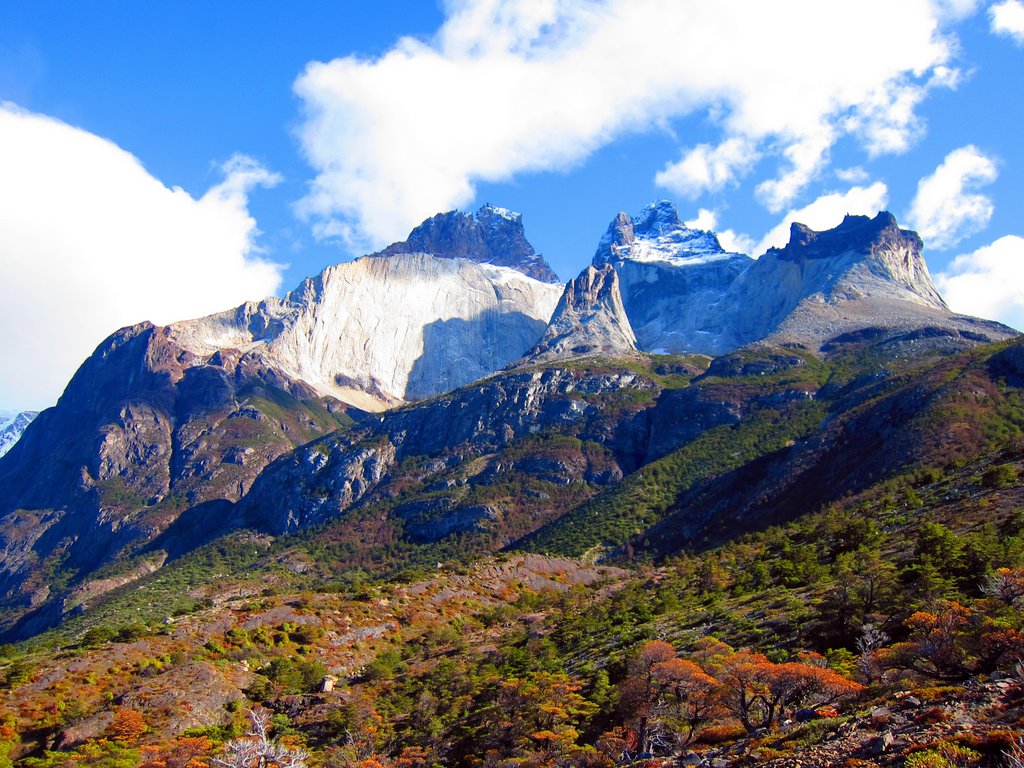
Some pictures from the W trek:




Bolivia Visa for Indian Citizens (from Santiago, Chile) AND Visa on Arrival for Indian Citizens
Indian citizens/ passport holders will be pleasantly surprised to discover that Bolivia is a very easy country to enter. If you are an Indian passport holder like us, you will know the pain of independent travel which is taken for granted by other backpackers. I hope that this post will encourage you to visit the beautiful country of Bolivia. The next time we travel to South America, we will definitely visit Bolivia, if only to endorse their hassle free visa policy.
Bolivia has visa on arrival for a fee (please verify the latest fee by calling La Paz airport) AND offers a FREE visa at its consulates world wide.
We obtained our Bolivia visa at the embassy in Santiago, Chile not once but TWICE. Once before our passports were stolen and once more with our new passports. On both occasions, our experience at the Bolivian embassy was quick, pleasant and smooth.
Documents Required
Documents produced during our first visit:
· Completed application form
· Copy of yellow fever certificate
· Copy of most recent bank statement
· Cost = Free!! (remember, Americans pay $140)
· Overall time taken: 20 minutes
· Questions asked: None
This was the most incredibly hassle free visa experience in our life. I couldn't believe my eyes when the consul guy just proceeded to stamp my passport within minutes of producing our document, and with a smile. We were told that extension is possible in Bolivia and is easy to do.
Losing the visa and getting it again
Unfortunately, fate would soon have its way with us and we would end up using our most important belongings in Calama, Chile. We had to return to Santiago to receive a new passport from the Indian embassy. So we went to the Bolivian embassy once again. This time, we told the consul officer about our loss and were greeted with disbelief. He pointed us to a young Bolivian lady present there and said to us "It will take her two months to get a new passport if she loses hers. You guys are lucky."
We were able to provide most of our documents, except the yellow fever certificate, which was also stolen. These guys were awesome though - they patiently dug through their records and found our previous visa and made us several copies of our yellow fever certificates.
Bolivia Visa on Arrival at the border (overland between San Pedro de Atacama and Uyuni) - a different experience
Bolivia does offer visa on arrival for Indians, but for a fee. If you are landing at La Paz airport, this is a great option. But if you are overlanding, getting it from a consulate is really easy and preferable any day.
I traveled with an Indian guy from Chile to Bolivia near San Pedro de Atacama. So I wanted to write about his visa on arrival experience to enter Bolivia. I already had a Bolivia visa from Santiago, so my case was very straight forward.
This person was only going to Bolivia on a four day guided tour and was returning to Chile at the end of it, so this experience may not apply to everyone. We all booked the tour in San Pedro and I was going to continue to stay in Bolivia. All the tour operators in San Pedro will tell you that you can get visa at the border and show you a chart that says how much the visa costs. According to the chart, it costs $30 for us. So, at the border, this Indian guy was told that they cannot issue the visa there and that he would have to get it at Uyuni (the nearest city to the border). They did not stamp his passport. At Uyuni, he goes to the Migracion office and asks them for visa. They say that he can pay the fee and they only give him a stamped tourist card for 4 days. They don't stamp his passport. They take the $30 and there is absolutely no receipt for it. At the end of four days, they let him get out without another stamp. We all think that this is a quick way to make an undocumented $30 and that this has happened before. Spanish was a big problem here and no one spoke English, so I guess if he insisted and knew how to, he would have had a proper visa on his passport at the border or at Uyuni. This border is nothing more than a small shed in the middle of nowhere, so I am not surprised that they did not have the facilities to issue a visa.
So yes, Bolivia VOA at border is definitely possible. However,
- Please be sure you get your passport & your tourist card (a little form you fill out at the entrance) stamped and a receipt for your fee. Be persistent!
- We have been asked elsewhere in Bolivia by Migracion people to show our passports (they do random checks in hotels) and they look for all these stamps.
- Write out some important statements in Spanish to use at the border (important)
- If you are part of a tour group, ensure you communicate this to your tour guide at the destination. They will be an important resource in helping you with communication.
Thursday, April 25, 2013
Why you should see the Kuelap ruins in Northern Peru (and Kuelap vs Machu Picchu)
In 2011, a million people visited Machu Picchu (MP). That is quite a lot of tourists! And justifiably so... Machu Picchu is old, enigmatic, located amidst immense natural beauty and Cuzco is a really charming base to visiting tourists. It is also draws people who want to simply trek the Inca trail, a really ancient trail used by the Incans to get to MP. When I saw dreamy Che in Motorcycle Diaries years ago, I decided that I simply have to go there one day.
However, there is a gem in Northern Peru - the Kuelap ruins which gave me an entirely different perspective! We saw both MP and Kuelap and at the end of it we decided that we'd rather skip MP, but not skip Kuelap. Again, to put confused minds at rest, both are really beautiful places and you will not regret visiting either of them.


Its easy to fly into Cuzco, but not Chachapoyas. Getting to Chacha is not as easy to But Chachapoyas to Kuelap is a breeze if you book a tour or even if you just take a taxi/combi. To get to MP from Cuzco, you have to:
1) Book a train ride to Aguas Caliente. Stay at over priced Aguas Caliente so that you can check out the ruins early in the morning. No roads go to AC.
2) Hike the Inca trail. 4 days of walking is great if thats what you want, but a lot of people agree that there are several other fantastic hikes all over Peru (in the Cuzco area, in Colca Canyon and in Huaraz). Inca trail will set you back by $500, while Inca Jungle Trek, a just as much fun option, costs less than $200.
3) Take the bus to some place near Santa Maria and walk 2-3 hours from there to Aguas Caliente along the railway tracks. Not easy to plan with public transport, but not impossible either.
From Chachapoyas, there are collectivos and taxis going to Kuelap.
I loved Machu Pichu itself, but I was not enamored by the crowds, the very high un-backpacker costs or the not-for-public-transport tag it carries.

However, there is a gem in Northern Peru - the Kuelap ruins which gave me an entirely different perspective! We saw both MP and Kuelap and at the end of it we decided that we'd rather skip MP, but not skip Kuelap. Again, to put confused minds at rest, both are really beautiful places and you will not regret visiting either of them.


Crowds
MP is really crowded. Its a world famous attraction and people world wide come to see it. You'll try to go in a meditative state and visualize life there 300 years ago, only to be brought back to reality by a loud tour guide with his group that just passed by. We had a tour guide in Kuelap, but the day we visited, 30 people visited the ruins.


Costs
Kuelap is a better deal for backpackers on a budget. You have to go spend the night at Aguas Caliente to be able to get to MP early in the morning. AC is a VERY expensive town where rates are in dollars! From AC it is a steep uphill walk for 2 hours (for the unfit) or pay $9 per ticket for the 20 minute ride up. $9 sounds cheap, but in the rest of the country you'll pay 9 soles for a similar ride. A sandwich at MP food court, the most basic version, cost me 20 soles. Cheapest train tickets to Aguas Caliente from Cuzco cost $48/way.
In comparison, a sightseeing trip to Kuelap including entrance fees, guide, food (excellent veg fare customized for us - placed orders on the way to the ruins, had lunch upon return), transportation all in a day's time cost us 160 soles or $62 approximately (2012).


Getting There
Its easy to fly into Cuzco, but not Chachapoyas. Getting to Chacha is not as easy to But Chachapoyas to Kuelap is a breeze if you book a tour or even if you just take a taxi/combi. To get to MP from Cuzco, you have to:
1) Book a train ride to Aguas Caliente. Stay at over priced Aguas Caliente so that you can check out the ruins early in the morning. No roads go to AC.
2) Hike the Inca trail. 4 days of walking is great if thats what you want, but a lot of people agree that there are several other fantastic hikes all over Peru (in the Cuzco area, in Colca Canyon and in Huaraz). Inca trail will set you back by $500, while Inca Jungle Trek, a just as much fun option, costs less than $200.
3) Take the bus to some place near Santa Maria and walk 2-3 hours from there to Aguas Caliente along the railway tracks. Not easy to plan with public transport, but not impossible either.
From Chachapoyas, there are collectivos and taxis going to Kuelap.
I loved Machu Pichu itself, but I was not enamored by the crowds, the very high un-backpacker costs or the not-for-public-transport tag it carries.
Culture
Kuelap is older and bigger than MP and is in remarkably good shape.
Kuelap was built by the Chachapoyan people long before the Incans came into the picture. They eventually did and ousted the Chachapoyans and ruled over them, thereby exerting their influences on the the architecture.

W trek, Torres Del Paine, Patagonia - a slow hikers itinerary
To my utter chagrin (and inspiration), I only encounter super fit hikers where ever I go. Why is that? I am the slowest hiker on the trail and never the fittest, so the timings other people quote never applies to me. So here is a very slow and relaxed hikers guide to the W trek in Torres Del Paine National Park, Patagonia, Chile. I also drew a map showing what's what. It felt great to be able to complete the trek and the next few posts will be about how to accomplish this.

Day 1 - Puerto Natales
- The bus from Puerto Natales picked us up at our hostel in the morning (I think 8 AM) and drove us to the national park entrance, where we paid our entrance fees of 15000 chilean pesos/person. The bus ticket from Austral Glacier cost 12000 chilean pesos/person.
- Continued on the same bus to the Catamaran @ 12000/person to Refugio Paine Grande
- Hiked from 12.30 PM to 6.40 PM
- Arrived at Refugio Gray around 5 PM
- Camped at Las Guardas
- Rained all night!
- Be the last to enter so that you can get to your backpack first.
- Pay catamaran fees on the boat itself.
Day 2 - Las Guardas campsite
- Broke camp very late. Very rainy and wet
- 1 hour walk back to Refugio Gray
- 4.25 hours to Paine Grande
- 2.5 hours to Italiano
- 7.5 to 8 hours of hiking in the entire day
- Wet in the morning, sunny in the afternoon
- No turn-back in Italiano if you arrive late. Free campsite, but clean and pretty.
Day 3 - Valle Del Frances
- Swami hiked up to the 2nd mirador (~5 hours)
- Niru hiked up to 1st mirador (~2.5 hours)
- Left campsite at 4 pm.
- Arrived at Cuernos at 6.45 PM.
- Rainy, sunny, windy!!
Day 4: Cuernos campsite and view of the Cuernos
- Longest day of hiking!
- 10.15 AM - started from Cuernos campsite
- 2 PM - Arrived at shortcut to Chileno refugio (after one large uphill climb and a downhill. Lot of flat walking after the shortcut, followed by steady uphill)
- 5.00 PM - arrived at Chileno campsite
- 6.45 PM - arrived at Torres campsite (mostly uphill)
- Camped @ Torres campsite
Day 5: Torres Campsite
- Woke up 4.40 AM to view sunrise at Las Torres, the parks most popular view point.
- Started walk at 5.45 AM (did a small bit of packing)
- Reached las torres at 6.50 AM
- very cloudy and very uphill; could not see the torres at all; very disappointed
- Returned to campsite, packed and left at 9.15 AM
- Reached Chileno at 10.15 AM
- Arrived at W trail entrance @ 12 PM
- Bus to Puerto Natales at 2.30 PM
Wednesday, April 24, 2013
Visiting Mt. Chimborazo, Ecuador
Visiting Mt. Chimborazo is an unusual tourist activity. It didnt take us too long to realize that it is not typically done by most tourists. The only folks who want to visit it are serious hikers or people who have hired a car to hike some distance up the mountain and be back by evening.
 |
| Construction ongoing at park entrance, mist because of 4500+ m altitude |
Getting To Riobamba:
The nearest town to Mt. Chimborazo is Riobamba, Ecuador. It is a 2 hour bus ride from Baños to Riobamba. Its very easy to find $1 taxis here, so we took one to our hotel. It is a 5 to 5.5 hour bus ride from Cuenca.
Stay in Riombamba:
We stayed at Hostal Oasis - a nice place with pretty rooms, friendly staff and a nice courtyard.
Eat at Riobamba:
Be wary of finding decent food in the evenings at Riobamba. All restaurants were closed. We finally stumbled upon a lady selling empañadas outside a door and on enquiry, she led us into a family run small restaurant. We quickly found ourselves being approached a friendly group of three young siblings who spoke flawless english. Daniel, the youngest, simply walked up to us and asked "Do you speak english?"
Getting to Chimborazo:
To go to Chimborazo mountain, take a bus going to Guarande from Terminal Terrestre. Buses take about 1 hour up (and 45 minutes back). The bus drops you off in the middle of nowhere, but exposes you to magnificent views of Ecuador's tallest mountain.
From the road, you can see the entrance to the national park. In 2011, this entrance area was seeing some new construction, probably a new park entrance office with waiting area and a ranger. There are two 'refugios' on the mountain - refuge hut.
- The first hut is 8 kms from the main road, on a very steady incline. The refuge hut is a well maintained structure, with a friendly ranger who lives there several days a month and takes turns with other park rangers. He sells soup, noodles and other simple foods.
- The second refuge hut is 200 meters higher than the first hut and is a 40-60 minute walk.
- Both refuge huts have flush toilets. The first one also has a kitchen with snacks and hot soup for sale.
 |
| First refuge hut |
 |
| Second refuge hut |
 |
| Inside the refuge hut. What a haven for hikers! |
Tips for Chimborazo:
Leave after a heavy breakfast. Pack lunches, snacks and water to last the day. Hike if possible, the altitude is really really high and you feel every bit of it.
Baños - Travel Guide
Baños is located on the slopes of a volcano. People here are used to volcanic activity and treat it like just another part of life. Its very common to see signs of escape routes along the town. BUT - with all that volcanic activity comes rich soil, incredible verdant scenary, great produce and a cool climate. While you enjoy that, there are all these adventure activities to try out that cost a fraction of what they cost elsewhere. Paragliding for $60? Yes!
Then there are the baths the town is named after. These are baths fed by thermal springs due to the volcano, but we did not get to try it out. I did go for a massage and a pedicure - massage centers and spas are plentiful, do try them out.


Getting there:
From Latacunga to Baños, take a bus to Ambato and then to Baños. ~2hrs and $2
To see/to do:
- Hiked up to bellavista and back. Go straight on Av. Maldonado toward the mountain and keep going up the trail. ~40 minutes to go up. Incredible views.
- Downhill biking. $4-$7/day. Go up to Cascada Pailon and get a truck ride back with bike for $1.50. Do not use tunnels while biking. There are paths on the side.
- Two ways to enter cascada - When coming from Baños, enter the way after the bridge. Not before. Lot of restaurants near the restaurant for a meal before the truck ride back.
- Canopy or bridge jumping - no need to go through a tour operator. Just go to the spot where the activity takes place and pay and do it right there. You can see all this while biking to Puyo.
To Eat:
- Helado de Paila. Very cheap and sin leche. Ambato y Maldonado.
- Meeting point coffee shop - owned by German. Many veg choices. German is great to talk to. He has been all over the world. Alfaro entre Ambato y Oriente
- Casa Hood - Great variety of vegetarian food, vegan friendly. Has a small library in the store which offers book exchange. While Swami went rafting and I didnt feel like going, I got a leisurely lunch here and then went to the spa for a massage.
- El Paisano - Highly rated vegetarian restaurant on Tripadvisor. Offers wholesome and unprocessed meals. The friendly owner is also an artist and sells some of his artwork in the premises.
- Cafe Good - Like casa hood and veg friendly, but we didnt eat here.
- I saw a lot of street stalls selling jugo de caña.
- Check out the indoor market - tons of cute stalls selling produce, juice and snacks.
MTS adventures (av 16 de deciembre y Luis A Martinez)
Rafting - $20
Ziplining - $17
Parapente/paragliging - $55
Bridgejumping - $10 while downhill biking
Downhill biking - $4/pp
To Stay:
Maria Princessa. $7 per person per room. A typical dinner at El Paisano costs $13 for two.
This is a really cool hostel - its a bit of an uphill walk from the main plaza, but Baños is so perfect, you wont mind it. The owner is Ecuadorian, but studied in Ukraine and hence fluent in Russian, English and German for some reason. Really smart and enterprising fellow. He will give you very good travel tips.
Monday, April 8, 2013
Quilotoa Loop, Ecuador
Every now and then during our sojourn in South America, we'd go on a multi-day trip that leaves us disconnected from the rest of the world. When we 'emerge' from such trips, for lack of a better word, our perspectives about life in general changes a lot - there is something about being unplugged. One such trip was the Quilotoa loop in central Ecuador.
For almost a day, Swami and I part ways where he goes trekking from one village to another and I choose to take the bus. Both of us end up having a very good experience, but I'll mainly write about mine.
For almost a day, Swami and I part ways where he goes trekking from one village to another and I choose to take the bus. Both of us end up having a very good experience, but I'll mainly write about mine.
 |
| Lake Quilotoa |
The loop can be anything you want - a trek, a walk, a bunch of loosely connected bumpy rides - all through the rugged countryside of central Ecuador, in Cotopaxi county. During the time we went, we saw only a handful of travelers after day one, and even those folks had hired a car for a day trip.
If you are ever in Ecuador, forget about time, go the full loop - either by road transport or by walk (if you have company) and it will show you an unforgettable side of Ecuador and travel in general. I have so much to say about these few days that I hope you will bear with me and read the entire bit.
What is the Quilotoa Loop?
It is a path that travelers take that mostly originates in Latacunga, Ecuador and winds eastward towards Laguna Quilotoa (lake Quilotoa) and after an overnight stay there, leads to the village of Chugchillan. From Chugchillan, one can go to the tiny town of Sigchos. From Sigchos there are regular buses back to Latacunga.Laguna Quilotoa is a beautiful crater lake. The transportation in the entire circuit is very infrequent, so its best to carry warm clothing, rain proof clothes and snacks (dried fruit, bocadillo etc.).
 |
| Bus Latacunga to Quilotoa |
 |
| Enroute scenery |
Latacunga to Quilotoa
Latacunga is the base for this trip. Infrequent buses from Latacunga reache Quilotoa early in the afternoon - inquire at the bus stop as soon as you arrive at Latacunga. When we reached the lake, it was raining heavily. So we decided to check out one of the restaurants there. To picture the place, it really looks like the middle of nowhere with a few hotels near the entrance to the lake. The village is really small with one or two roads and a few establishments that advertise food and stay. These hotels are family owned and we stayed at Hostal Chukirawa right by the lake. The room cost includes a home cooked meal by the owners. The people here speak Quechua and are dressed in the traditional attire of a black skirt with embroidery, white blouse, colorful jewelry and long socks! |
| Our accommodation in Quilotoa |
We walked down to the base of the lake - its about 30 minutes down and 1 hour up. The views are incredible all around - the scenery here is unparalleled. If you just want to stay here an entire day and trek the entire rim, thats possible too.
 |
| Hiking up - I am striking a pose, though in reality it is to mask my exhaustion |
 |
| The path to the bus stop is on the left, the lake is on the right |
Quilotoa to Chugchillan
While we were there, it rained a lot. So the following morning, amidst heavy rains, Swami spotted a couple from New Zealand who were setting out to walk to Chugchillan. We decided to part ways here. Swami continued forward by foot, while I stayed back to take only bus for the day - a 2 pm bus to Chugchillan. But the bus can be up to one hour early! Afraid of missing the bus, I walked to the road where the bus passes, only to be met by steady rain and no place to take shelter on the isolated village road. Not even a single awning. Finally, after walking a bit more, I found a little shop, more a house really. A very small house. Two men were waiting there. After confirming that the bus is yet to pass, they invited me to share the tiny space to stay dry. Eventually, I was where I was from. (We always see wonder when we tell we are from India, and the next question invariably is how far it is to fly there.) We swapped family stories. The young Quechua man had 10 siblings! He taught me how to say a few words in Quechua. It helped pass time while the bus arrived.
 |
| On the way during Swami's walk |

Getting stuck and unstuck in the mud
The road to Chugchillan is really bad and not a tourist in sight. The locals are mostly indigenous Quechua people living in the villages around the loop. I realized that the locals rely on this bus for so many things. It was very interesting to watch life unfold around me. Moms in their typical traditional attire cart kids around on their backs. Old men with sun ravaged skin huddle close in their jackets to stay warm. The bus is the only way to transport essentials - sacks of rice, maize, corn and even a bag of live chickens made its way to the bus. People are ever courteous - they shout "gracias" loudly to the driver when their stop comes. The gratitude comes first you see - no stop, no excuse me, just thank you.
Due to heavy rain and road building activity, the bus had to be helped out of potholes twice. Once it was helped by a forklift nearby and once all the women got out of the bus and walked ahead while the men pushed it out of the pothole. People do this all like clockwork - clearly they didnt get stuck for the first time.
Elsewhere, such delays would be inconceivable. I cant help but marvel at how easy people take things far far away from big cities. My camera stayed inside all this time due to the rains, so my words will just have to suffice in painting the picture my mind now sees.
A $1 ride that I will never forget!
When I reach Chugchillan, I see Swami waiting for me by the road. He had secured a place to stay at the lovely Mama Hilda hostel. I was ready to wind down for the day. We settle by the fire in the common room, swap stories over hot tea and relax for the rest of the day.
 |
| mama hilda hostel |
Chugchillan to Sigchos - riding in the back of a milk truck
After a beautiful, refreshing stay at Chugchillan's Mama Hilda Hostal, we get to know that we can take the milk truck back to Sigchos. The milk truck is our only way as the bus to Sigchos goes past at 4 AM!!! Yes, 4 AM. But the milk truck goes by Chugchillan anywhere between 8.30 and 9.30 AM. After breakfast, we wait for the milk truck from 8 AM. It finally makes it way after a long wait. Turns out, the milk truck is the way all the locals sell their milk. There are huge containers in the truck and it makes frequent stops all along the way and collects milk in anything from plastic water bottles to huge metal tins. The milk is then filtered through a cloth into a tub and there are many such tubs. People huddle around the bus to catch a ride and so did we. The ride to Sigchos was an adventure by itself. At Sigchos, we found a place to eat - we had the company of the Kiwi couple, who we'd continue to meet during our travels - all the way south in Patagonia!
 |
| Milk Truck |
 |
| Ecuadorian ladies and a milk truck |
 |
| Milk truck! |
From Sigchos, there are many buses to Latacunga. Just find the way to the bus terminal and ask!
Subscribe to:
Posts (Atom)
A week in Bhutan - An Overview
Bhutan, India's landlocked neighbor on the north east is slowly and cautiously edging its way into modern life. Its a norm to see board...
