Monday, April 8, 2013

Iquitos: Back to Land

When we arrived at Iquitos, I was tired and ready for a few days on land. We had spent way too much time on the river and I was craving decent vegetarian food that wasn't made of plantains and wanted to just enjoy a nice air conditioned room (remember, it was really hot, but it would also rain every now and then). So you can never really step out without your rain jacket.

We checked into a hotel that we randomly found, as we hadn't done any research. But we headed to the restaurant "Dawn on the amazon" for this meal:

A meal with fresh guacamole after forever!

Sam, one of our travel companions and I wanted a very specific vegetarian pizza at Chez Maggi, Iquitos. Not knowing how to explain to the waitress, we drew her a circle on our notebook and indicated the toppings on each side. The pizza was perfect! Mine is the cheese-less side, with mushrooms. Sam's is the cheesy side, minus the mushrooms. Say that in Spanish, now!

Pizza at Chez Maggi

Riding the local bus from Quistaquocha

Las Boras - a day trip on the boat from Iquitos

The floating village of Belen


How will they bring this out?

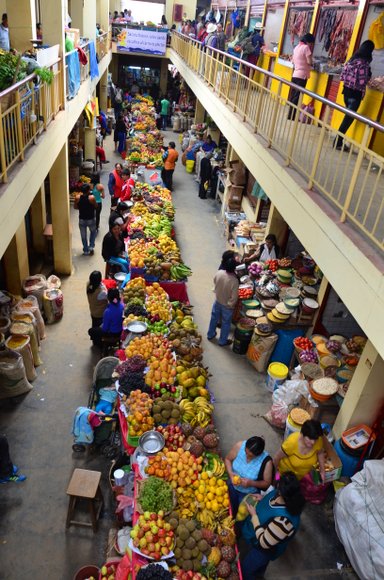
The market at Belen

Interesting ways to buy oil. I like the variety.

Just like India

Another vegetarian meal

Mamey - the local version of sapota

We discovered Iguana Haus shortly after our first day. They had excellent air conditioned, clean rooms for 40 soles, with wifi and kitchen. We cooked several meals here. We decided to fly to Lima from here on as time was running short and our visa for Chile would be expiring soon.

So we walked around the airline companies and finally bought tickets to Lima for USD 170 for two people. Not a bad deal within a few days notice. We just hung out with Sam and Law and eventually met Cat for the first time! We'd go on to meet Cat later in Peru and go on the Inca Jungle Trek with her and almost eight months later, she'd come to India and stay at our place in Bangalore! Travel friends are so much fun!

Vegetarian food to try out at Iquitos:

  • Dawn on the amazon
  • Yellow Rose Texas
  • Pizza Chez Maggy will make Pizza whatever way you like
  • There is a veg resto on Jr. San Martin between Jr. Prospero and Ramirez Hurtado
  • Rest. Vegetariano Darshan on Jr. 2nd De Mayo between Av. Elias Aguirre and Av. Miguel Grau - near plaza 28 de Julio.

Sightseeing:


  • We went to Las Boras and Quistacocha. Las Boras is an Amazonian tribe which tourists can see and interact with the tribe members. I dont think we'd go specially for this, but if you have time to kill, why not?
  • Quistacocha is a big zoo and entertainment park. Okay to go. Kids will enjoy.
  • Belen - the market is very interesting. The floating village is okay, but gives a very different perspective on how people live. I would recommend going as a group.


Sunday, April 7, 2013

Quilotoa Loop - How to do it?

Some information about the Quilotoa Loop and how to go about doing it. There are many ways to do it. Here, with this plan, you can do it even if you do not want to trek, but just want a very different experience.


Nearest big city is Latacunga. From the terrace of Hostal Tiana, you can get a clear view of the Cotopaxi. Latacunga has a vibrant market and plenty of 'peluquerias'. 

Quito to Latacunga:


From Quito's Terminal Quitumba - its the last stop on the troll bus on circuits C2 and C4. Buses are color coded and 25 c a ride. Wait for empty trole. 1.50 ticket + 0.20 terminal fee. Really swanky bus terminal. Looks better than many airports sans long security lines. Ticket counter 20/21 have tickets for Latacunga. 1.5 hr bus ride. Hostal Tiana very cute place to stay. Bunks are really spacious and have reading lamps.

Quilotoa:


  • Bus from Latacunga departs at 11 AM. Terminal #16 Vivero bus.
  • Bus costs $2.50 per person and there is a bus later in the afternoon. There is also a minivan that leaves for Latacunga around 3 PM.
  • Around 1.30 PM to 2.30 PM, there is a bus that goes to Chugchillan from Quilotoa. Need to wait from 1.30 pm on the street.
  • Latacunga to Quilotoa bus timings - 10, 11.30, 2 and 3.30
  • Hostal Chukirawa @ $10/person including breakfast and dinner. Clean rooms. 

Chugchillan:

  • Mama Hilda hostel - food + stay @ $30/2 people. There are other hostels too.
  • Lovely hostel with great hosts
  • Milk truck leaves at 8.30-9.30 AM in the morning to Sigchos. Or early AM bus ~ 4.30 AM. $2/person.
  • Bus ride to Chugchillan @ $1

Sigchos:

  • Bus from Latacunga to Sigchos @ $1.80/person. Easily available from the bus terminal. 
  • We walked into a nice restaurant at Sigchos and requested them to make me a vegetarian meal. $3.60 for 2.

Lagunas - where time stands still

We finally made it Iquitos, 12 days after we left Chachapoyas. I felt like we had lost a sense of time and left all that we knew far far behind. Being in the Amazonas makes you feel very isolated, even when you are surrounded by tons of people. Life is so laid back out here, but people have jobs and lead real, full lives. There are many foreign tourists in Iquitos, enjoying a laid back life. I couldn't help but wonder, how will I ever move back to busy corporate world after this?

Main street, Lagunas

Jungle tour office information

Boat office timings - Lagunas

Breakfast at Lagunas

Near the "port"

Village boys throwing water balloons at the boat to Iquitos

Our boat

Waiting to get off!

Finally, Iquitos!
 When we finished our jungle trip in Iquitos around noon on 31st Jan, 2012 - there was a moto waiting to take us back to Lagunas, a 25 minute ride through extremely bumpy roads. We walked right up to the port, only to discover that there are no boats the following day! Apparently, this is very normal. There are simply no boats to Iquitos on all days! And here we were, stuck in charming, but severely limited in choices Lagunas. Its very important to find out the boat timing schedule ahead of time. The rest of our travel companions were still in the jungle, choosing to stay one day longer than that. So, we decided to chill in Lagunas. There are power cuts here and there is no internet, so really not much to do other than read, write or just hang out.

Lagunas is so unlike any other place we have ever been to. Its incredibly basic and hot and there is nothing much to do except walk around. There are a few stores on the main street leading to the really small "port", and a few hotels for people who work on development projects. There is a plaza de Armas and the restaurants are really hole in the walls or homes converted into makeshift eateries.

Saturday, April 6, 2013

Amazon Jungle: Pacaya Samiria National Reserve, Lagunas, Peru


There are many ways to experience the Amazon jungle in South America. Before we started our travels, the Amazon was one of the top things we wanted to see. When I mention Amazon throughout this blog, I usually refer to the Amazon basin, not the specific river itself, though we did get the opportunity to go on the river once in Iquitos.
Cute little monos in Pacaya Samiria NR

The Amazon basin is so big, you can take a trip through it from one of several COUNTRIES. Colombia, Peru, Ecuador, Brazil, Bolivia all have huge areas of "selva" or jungle that tourists can go to. This is not an exhaustive list, I am sure. We skipped Colombia right away as we had researched that selva trips from there are not safe. Ecuador didn't work out due to timing issues. But in Peru, we were finally able to realize our dream. We zeroed down on the Pacaya Samiria National Reserve, as it is not far from Chachapoyas, and it is also on the way to Iquitos, a city that is connected to the rest of the world only by water and air, not land. 

Getting to Pacaya Samiria National Reserve, Peru


There are different ways to book a trip into this reserve - either from Iquitos or from Yurimaguas. When booking the trip from Yurimaguas, your starting point will be the tiny village of Lagunas, which is an eight hour boat ride from Yurimaguas. There are different authorized tour agencies who can take you into the selva (jungle), and all of them have a presence in Lagunas and Yurimaguas.

We booked our selva trip with Huayruru Tours. We first contacted them via email and received a quote from them before visiting their office in Yurimaguas. We also joined a few other travelers in Yuri - Sam and Law - the cousins from England and an English couple who all made excellent travel companions. We stayed overnight in Yurimaguas as the boat to Lagunas leaves early in the morning and we needed a day to get money and supplies - hammock, a lunch box, medicines (moquito repellant), snacks and other sundry items. Definitely make sure you are well stocked on toothpaste, mouthwash and other hygiene items. There is nothing available in the jungle and Lagunas is not a safe bet - you may/may not find things.

The boat from Yurimaguas to Lagunas


If possible, go to the port the previous day to confirm the boat leaves the following morning. The boat may or may not leave the following day. The ticket cost us 25 soles. Hammock is compulsory as there are no seats on the boat (or lancha, in spanish). There is plenty of space to hang hammocks in an organized manner in rows.  Get to the boat well ahead of time as you'll find a good spot for your hammock. There are people available to help you hook up a hammer for 3 or 4 soles on the boat. Or you can do it yourself. The boat ride is typically 8-10 hours long. Restrooms on the boat use river water and are not the cleanest. They will do for an emergency, but its best to be planned. :)

Hammocks strung in the boat to Lagunas
The path to Lagunas

In Lagunas, someone from Huayruru tours will be available to pick you up and take you to the office, if you have notified ahead of time in Yurimaguas. In the office, you will get details about the jungle trip and you can negotiate a bit. This is where you will state your dietary preferences, decide how long your trip should be and this is where you will leave your bags. They put us all up in a couple of local hotels. Lagunas doesnt have too many of those! Breakfast is provided the following morning before starting the trip.

The Jungle Trip

Transportation to park entrance
We started early next morning from our hotel and the tour company will take us in a moto-taxi : a motorbike outfitted with a cart of some sort. We then stop at the park entrance and get our permits. Our canoes are loaded with food for the next 5-6 days. All our bags are back in the tour office and we are asked to bring very limited luggage. Just one or two change of clothes for the night, rain gear and medicines, mosquito repellant etc. When we went, the water level was very high - so we did almost no walking during our trip. It was all on the boat and we stopped at campsites along the way for the night. We returned to Laguna after a 5 day stop in the jungle.
The Huayruru tours office in Lagunas. Hammock space on top for travelers to wait.


Accommodation for a night in the jungle


Our transport for the next 5 days


Victoria Regis - strong enough to hold a baby without sinking!

Gear for the trip for the customers and the guides

Food - clearly, we mostly ate plantains
 Our jungle trip was a very low key experience. We were very close to the water throughout, on canoes. We ate simple food and stayed in very basic lodging. And we encountered very few tourists (<10). Our guides were fantastic and we spotted some really beautiful bird life and monkeys. Our choice of timing was a bit unfortunate, as the water level was too high to see jaguars or puma, but when we went to sleep, we heard the mono rojo (red monkey) which roars like a lion and one hot evening, we stopped by a secluded part of our campsite and dipped an old mug into the river and bathed like in an Indian movie from the 70's. The memory was truly unforgettable!

Cost of Jungle trip: ~100 soles per person per night. Includes three meals. Vegetarian possible, though you will all get sick of the food by the end of the trip. Interestingly, everyone opted for a vegetarian meal on our trip. But some folks chose to have some freshly caught fish right from the river.


Chachapoyas to Yurimaguas - The Amazon experience begins

Chachapoyas to Pedro Ruiz


We were really excited to experience the Amazon basin and decided to do it in the Pacaya Samiria Reserve near Lagunas, Peru. Its on the way to Iquitos and is an immense national reserve that doesn't get the attention it deserves. Navigating this part of Peru needs a lot of time and patience. Timings are never quite what you expect - its all + or - half a day. Thats how this part of the world rolls. There is beauty in it and we learned to appreciate it in time.

Highlights:
Chacha to Pedro Ruiz - 2 hrs and 10s/person by collectivo
Pedro Ruiz to Yurimaguas - 50 soles/person in a/c bus. Buy tickets from travel offices on main road. 

Pedro Ruiz is a small town that is 2 hours from Chachapoyas and it is only from here that one can go to Yurimaguas. Now is about where you need to start going with the flow - stock up yourself with snacks, drinks and reading material and let the Amazonian world unfold around you at its own pace.

Once we reached Pedro Ruiz, it was about 7 pm in the evening. The main road where you will get off the collectivo is lined with tourist offices and you can enquire for bus tickets here. Once you buy them, you will need to find a place to eat. One look at the dusty, remote town and I was sure there would be nothing vegetarian here. But Swami, ever the optimist, decided to ask. I had made up my mind that he would get recommendations for pasta or rice, but I was completely confounded when a local answered to S's question: "vegetarian food? of course, walk that way and there is a restaurant.". When I pressed him for the name of the resto, I got a reply "solo restaurante vegetariano". Needless to say, we discovered that EVERYONE in that remote, Peruvian town, knew this place! I absolutely cannot remember how to get to this place. But I can tell you, if you find yourself in Pedro Ruiz, give yourself a chance and ask the locals where to find "Restaurante Vegetariano". Update: I do have a picture of the restaurant, absolutely go here!

Vegetarian restaurant in Pedro Ruiz, Peru: Restaurante Monte Sinai


soy saltado in Pedro Ruiz

Pedro Ruiz to Yurimaguas


We boarded the bus to Yurimaguas, it cost us 50 soles each. It was really late and we ended up sitting next to the driver in the spare driver's seats. I think they took the bunk beds right behind us. Once a few seats cleared up, we went back into the bus. The bus had a flat tire and we reached Yuri at least 5 hours late! Welcome to the Amazon.

Yurimaguas is a river town and not a place for sightseeing. We checked into hotel Rio Huallaga, which is the river the town is situated on, as they had very inexpensive dorm beds that no one else was using. Very clean though! Yuri also has a nice chifa that looks the town's only fine dining place. Just ask "Donde esta chifa grande, and someone will tell you".

For those who want to do an amazon jungle trip in Pacaya Samiria, Yurimaguas is the cheapest way to do it. It is much more expensive from Iquitos. From here, you will go by boat to Lagunas and there you will commence your Amazon basin jungle trip. We don't actually see the Amazon river until we are in Iquitos, but this is the Amazon basin.

In Yurimaguas, remember to do the following:
  • Buy snacks (plenty of it) and some food for the boat trip to Lagunas next day. No vegetarian food on the boats. We packed tomatoes, avocado and bread and made our own sandwiches.
  • ATM - the last ATM until you reach Iquitos. Get enough money for the Amazon trip, which costs ~100 soles/person/day. This was a great deal in 2011, so expect to pay more!
  • Hammocks and a lunch box - you absolutely need a hammock. The boats do not come with hammocks nor do they provide plates/spoons for your food, if you choose to eat there. We bought hammocks and boxes for our food. Even if you plan to not eat, it is easy to keep things like bread or just get some rice.


Chachapoyas - a hidden gem in Northern Peru!


I know tons of people who go to Peru every year. With one of the world's top most attractions to see in Southern Peru (Macchu Picchu, I am looking at you!) northern Peru doesnt get much of a chance. Especially when its way out in the middle of nowhere. We discovered that Northern Peru is our favorite part of Peru, thanks to a gem called Chachapoyas. To get to Chacha from Ecuador or elsewhere in Peru is no easy task. Check out my previous post  about how to get here.

Chacha is located amidst some beautiful natural scenery. Its the base if you want to visit Kuelap ruins and Gocta falls. We stayed at the kind and friendly Hotel Amazonas on the main plaza (just walk around it once and you'll find it) @ 40 soles/night (private room + bathroom).

Highlights of Chachapoyas:

Market scene

Gotca Falls

Purple corn - maiz morada

Fruit bounty in the market

spotted! soya milk

Plaza de armas - Chachapoyas

A ubiquitous juice shop in the market -  The quinoa drink here is very good


  •  Super laid back main square with really friendly people. We would get stopped every now and then by a curious local wanting to know more about us. By the end of our stay there, we were greeting people with holas every time we went to the square.
  • We met Diana, the bollywood fan. She was helping her friend sell some jewelry and she jumped with delight when she saw us. She was eager to tell us that she loved Shah Rukh Khan, Rani Mukerjee and Kajol.
  • We met a school teacher, who likes to visit the plaza every day in the evening. We even got interviewed for the local paper by his reporter friend.
  • 2 vegetarian restaurants and a superb market selling the freshest of produce. See my blog post here.
  • Finding vegan cookies at the mini mart on the plaza and other goodies. See the map in the link above for more info. What a delightful mini mart!
  • We got lost in Chacha's market. There is a spice vendor there who will sell various spice mixes, freshly mixed.
  • The Peru Tourism Office on the main plaza is a great find. They are a nation wide tourism chain and have fantastic maps. They speak very good english and will call other offices to find specific information for you.
  • The spicy sauce in Las Rocas restaurant on the main plaza. Very friendly owner!
  • Totally safe and muy tranquillo.
  • Base for the wonderful Kuelap ruins, which is a beautiful ruin.
Cost Facts:
  • Day trips to Kuelap cost 50 soles/person and includes lunch and a guide. Book at Turismo Explorer on the main plaza.
  • Day trips to Gocta falls cost 60 soles/person, incl. lunch and guide. (vegetarian options available). In fact, lunch was really tasty!

Tuesday, April 2, 2013

Salento, Colombia Travel Guide

I never get tired of repeating this. Salento, Colombia was one of the highlights of our South America trip. The verdant valleys, long walks, the day trip to an eco farm and the warm hospitality of the La Serrana hostel are enough to make any traveler happy. Here are a few drawings that I drew showing what is where in Salento, Colombia. I love drawing little maps in my notebook. 

Here is how to get to Salento. Its not exactly on the main road or a routine stop with plenty of buses going to it. Its tucked away and we have heard stories of robberies in that stretch.

Best way to get here: take the bus to Armenia (get there before 8 PM) and take a mini bus to Salento. You could get off at the midway point shown below, but only if you are in a group and its daylight.


A little map of Salento. The viewpoint on the top of the hill is really pretty and has a swing! Jesus Martin coffee is not to be missed too.


The really beautiful Valle De Cocora:

If you are only interested in a good view of the palms and not a long hike, the follow the road from where the jeep drops you for another 10 minutes and turn into the black gate on the right. A bit further you will find excellent views for photos. Walk however long you want and return. The rest of the hike is quite beautiful, but the wax palms are only visible towards the end.


Ecuador-Peru Border Crossing at Zumba/San Ignacio/La Balsa


Of all the border crossings to enter Peru from Ecuador, this is probably the least traveled route. It is also the longest and quite tricky and requires a good deal of patience. Plus point though is that it is very scenic, no one fleeced us and it was like an adventure.

Highlights:
  • (all costs are for two people)
  • Overnight bus from Vilcabamba to Zumba in 6 hours - $13
  • Collectivo or taxi to La Balsa (border village) $18
  • Cross the border to Peru
  • Take a collectivo to San Ignacio 28 soles
  • Take a moto taxi in San Ignacio to the terminal for a mini bus to Jaen
  • Mini bus to Jaen costs 24 soles
  • Stay at Hotel Jaen - 40 soles for a private room with bathroom
  • Next day morning - collective to Bagua Grande - 12 soles
  • Another collective to Chachapoyas - 42 soles
  • Pack plenty of snacks. There is no food in any of the stops along the way, especially vegetarian. I recommend bread, cookies and the likes.
Vilcabamba to La Balsa, Ecuador

This border crossing was the nearest to Vilcabamba and its valley of longevity. After a really relaxing meal of locally produced Tofu at Vilcabamba, we walked to the bus stop to board our 10.30 PM overnight bus to Zumba. The trip ended up taking over 10 hours instead of the usual 6 hours because there was a road block due to landslide along the way. Since the bus couldn't go anywhere and no one would clear the remote mountain road in the middle of the night, the driver turned off the engine and went to sleep! There were only a handful of people in the bus.

Waiting for the road block to be cleared:


Because of this delay, we reached Zumba at 8 AM and missed an earlier collective that goes to the border, La Balsa. We were tired and hungry when we got off. Finally we brokered a deal with the taxi driver to take us to a place for breakfast and then on to the border. The bus terminal at Zumba was so spanking new that restrooms were not yet open to the public. There was one restaurant, but they didn't have any usual breakfast items. But they did have a tourist booth, where we were handed tourist maps and ostensibly made to sign the tourist register.

The new terminal at Zumba:

Enroute from Zumba to La Balsa:


The taxi driver took us to a spotless little restaurant with an equally clean bathroom, where we got a chance to freshen up and eat. Zumba is very scenic and so untouched. The taxi ride to the border was fun and roads weren't great, but the driver chatted with us the entire way and played his favorite music from a little pen drive. We passed a checkpoint where a cop checked out our passports and then we arrived at 'La Balsa'. La Balsa is a street with a few shops and the immigration building. Just beyond is a bridge that goes to the Peruvian side. There are a few exchange shops, a couple of stalls to buy snacks. The immigration building is like a small store and was locked when we walked up to it. Yes, locked! After a few minutes, a guy with full army gear slowly walked up to us and gave us a cheerful grin. He said hello and proceeded to open the locked door to the office. He stamped us out and we were on our way in less than a minute. When we walked to the border-bridge, it was quite empty with no tourist in sight.

Immigration officer fully decked out in army gear:


Spotted: in the Peruvian immigration police checkpoint - Taj Mahal on the calendar


Onwards to the Peruvian Side and Jaen

The Peruvian side seemed even more relaxed. A group of people were standing and chatting. We blithely walked up to them and asked for the way to the immigration office. One guy seperated from the group and nodded his head towards a small building. We then noticed the text on his jacket "migracion". He stamped us in and sent us to the police booth across the street about 100 meters away. This immigration guy even helped us get a cab to San Ignacio.

I had to hold this cute Peruvian baby in the collectivo while the mom sorted out her things. She just got in, placed the baby on my lap with a smile and started settling herself and then took the baby back.


Collectivo to Jaen:

  • After two collectivo rides, we finally reached Jaen. Be careful about prices you pay everywhere. Make sure you agree on a price before hand.
  • In Jaen, try Hotel Jaen or Hotel Cesar on the main road close to the bus stand. Bargain for hotel rooms.
  • Jaen has a chifa where we got vegetarian food. We also noticed a vegetarian restaurant, but it was closed.
  • After dinner, we walked to the plaza de armas in Jaen. It is very pleasantly crowded and fun to people watch.

Jaen to Chachapoyas, Peru

We needed a break from the non stop monotony of collectivos. The night stay at Jaen did the trick. After breakfast at a coffee shop in the morning, we took a collectivo from near the bus stand to Bagua Grande (6 soles per person, ~ 3 hrs). Bagua Grande was hot and dusty with nothing to eat. We found a collectivo to Chachapoyas, but had to wait for it to fill up before we could leave. 21 soles per person, ~ 2 hours. Pack food and drinks in Jaen.

Finally in Chachapoyas:


How much does backpacking in South America cost for a couple?


Whenever the topic of long term travel comes up, a lot of people are curious about how much it costs. Long term travel has the reputation of being really expensive, versus say, living at one place for the same duration of time. However, we found out that compared to living at one place, paying rent and utilities and eating out, its not that much more expensive. It could even cost the same or less, depending on your lifestyle! The big difference, however, is the fact that you are earning a steady income while at home and unless you are a really talented writer or one of those people with really flexible remote consulting jobs, your income on the road takes a hit.

I thought I'd dispel some myths about how long term travel is not so far reaching after all, by sharing some real numbers about how much our four-month-south-america trip actually cost. Here is a high level overview:

From the time we started our trip at the airport in the USA, including the airfare and travel insurance, we spent a total of $13952 over a period of 133 days. I have dissected the cost in a couple of different ways below and all figures are for two people and in USD in the year 2011-2012.

Cost By Category
Airfares (both to and fro and within South America) - 2,947
Food (includes groceries) - 2,143
Trip insurance (the best money we ever spent)  - 756
Post-Loss - replacement passports, replacement American visas, new airfares as we had to reschedule old flights - 1,575
Miscellaneous - 437
Shopping - 347
Sightseeing - (also includes the cost for 14 nights of stay due to various trips and treks) - 1,637
Stay - (Does not include stays incorporated as a part of multi day trips with stay-included fares) - 1,974
Transportation (non-plane and includes several overnight buses and one overnight train) - 1,747
Visas - 390
Grand Total - 13,952

If we hadn't lost our backpack in Calama, Chile, we would have saved at least $1575. We also lot a lost more in sheer value of goods lost. This cost is only for TRIP INTERRUPTION, which is the extra amount we spent only for identification documents and rescheduled air fares. I am not even counting the money spent in food and shelter or transportation to two different embassies.

Cost By Country (ONLY includes categories: food, miscellaneous, shopping, sightseeing, stay and transportation)

Bolivia - 693 in 24 days @ $29/day
Chile - 2,703 in 30 days @ $90/day
Colombia - 1,630 in 26 days @ $63/day
Ecuador - 1,183 in 22 days @ $54/day
Peru - 1,886 in 31days @ $61/day
Total for basic travel expenses - 8095 in 133 days @ $61/day

Lowest Hotel rate per night - $4 for a very clean lake view basic room on the shores of Isla Del Sol, Bolivia
Highest hotel rate per night - $81 at La Casa De Mireya in San Pedro De Atacama, Chile
Average hotel rate per night - $21
Average hotel rate per night if we didn't stay in Chile - $17

Number of ATM withdrawals - 49
Amount in ATM fees - $78 (all refunded back to us thanks to an excellent debit card)

Since we lost our stuff our morale was a bit on the lower side and we were really busy collecting documentation for replacing our belongings, we were less diligent about tracking our expenses in Bolivia. Even if I padded my expenses in Bolivia by a generous 10%, the cost per day will still only go up to ~ $33/day and thats for two people.

How did we travel?

These numbers dont mean a lot unless they impart some sense of how we travel. For lodging, we usually chose hostels or small family run guesthouses. In expensive cities, we went with bunk beds and while mostly we had private rooms. In Bolivia and Peru, we almost always had a private room with a private/shared bathroom.

We cooked a lot at hostels, got groceries such as bread, fruit, vegetables, rice and pasta. However, whenever we spotted a vegetarian restaurant, we had at least one meal there. We heavily favored Hare Krishna restaurants in the cities for their reasonably priced, vegan friendly, set lunches. In Bolivia, we ate a lot at markets as you could coffee, bread, juice and api (corn meal porridge) at really low prices.

Transportation - almost always public buses/metros and collectivos. We took taxis when we had to go to bus stand or airport to go to a different city. Long distance buses were mostly semi cama or sometimes cama (fully reclined seats).

Sightseeing - apart from the jungle trips and treks, we mostly organized our own tours. We took public buses to places of attraction and did our own 'sightseeing'. However, sometimes we'd book a tour from the hostel if its convenient and includes transport and fees.


Monday, April 1, 2013

Travel Logistics - Backpacks and Luggage

Months before, no years before, our adventure commenced, I obsessed over what to take with us - we bought our backpacks 3 years before we actually left. We ended up using it quite well by taking it with us everywhere we went. However, the reality is that our views and perspectives change so much over a period of time, I have decided that what pack to take and what to put in it are not worth agonizing over.

When we first selected our backpacks, we endlessly thought and considered between a hiking backpack (top loading) and a travel backpack (front loading). After hours of research, we finally bought the Eagle Creek Explorer LT (Men and Women's) at the price of $250 each. These packs are no longer produced, but they last to this day and are extremely practical and worth the money.

Somewhere along the way, we started enjoying multi day hikes as well and got ourselves hiking backpacks too, so we had a choice in what we could take with us on our trip.

Niru's main backpack - Eagle Creek Explorer LT Women's version; 50 Litres. Front loading travel pack. No longer under production. Comes with matching 15L day pack, which I did not take, much to my regret.
Niru's other bag - Ebags Piazza day bag. I also carry a foldable REI day pack in my bag. This is a great bag and is very useful for just around town. Can hold a small water bottle, a note book, a kindle and other essentials.
Swami's main backpack - Gregory Z55 top loading hiking backpack
Swami is also carrying an REI daypack and a small camera bag.

Hiking Backpack vs Travel Backpack while travel backpacking

You may agonize over this endlessly, but in reality, it will not matter what you take. It needs to be something that is comfortable to carry with wide hip belts and good quality shoulder belts. Travel backpacks are easier to pack, but with packing cubes organization is much easier. Hiking packs can take more things than a travel pack - as you tend to stuff more into them and they end up being heavier. They are also easier when your trip involves a multi day trek and you need to carry camping equipment. I carried a travel backpack and Swami carried a hiking backpack - neither of us regret our choice even though we did city travel and multi day hikes.

Daypack - what worked and what didn't

We made some not so great choices in this department. Swami's daypack + camera bag combo did not work for all the gadgets he was carrying (gadgets - a topic by itself). The camera bag shoulder strap dug into his shoulders and did not work well with his main pack. In Colombia we ended up getting another big day pack, which eventually got stolen.

I too found the REI day pack very difficult to pack and take on day trips. If I had to do this differently, I would just take the day pack that came with my eagle creek. Somewhere under 20 litres with pockets for small stuff and one big pocket for big stuff will work really well, especially when the day pack is the stand along luggage (for example: Inca Jungle Trek, where we only took a day pack).

Packing Cubes and other accessories

Packing cubes ROCK! These are our favorite travel accessories. We find the small size and long size ones to be very useful to stuff inside backpacks. I also carried one medium size packing cube in my backpack.


Size of Backpack

We saw a lot of folks carrying enormous backpacks. Ours was one of the smaller ones out there and was often remarked for its size. I found 50 litres to be quite big as I could carry quite a few things in it and found the weight bothersome. In Quito, we shipped quite a few things home and donated some of our clothes too. I found that I could easily have managed with a 40-45 litre backpack and a 15-20 litre daypack.


Monday, March 25, 2013

Where to stay in South America

We loved most of the hostels we stayed in South America. I added a page with a list of hostels we stayed in.

Our prerequisites:

  • clean beds and bathrooms
  • wifi
  • kitchen to cook meals
  • not a party hostel with teenagers and early 20 somethings
We would choose a dorm room or a private room depending on the price. In big cities, we tended to go towards dorm rooms (4-bed dorms), while in countries like Peru and Bolivia, we almost entirely stayed in private rooms.


You can find the list of hotels/hostels here.

A week in Bhutan - An Overview

Bhutan, India's landlocked neighbor on the north east is slowly and cautiously edging its way into modern life. Its a norm to see board...